Callable 接口
用法 :
package threadPool;

import java.util.concurrent.Callable;
import java.util.concurrent.FutureTask;
import java.util.concurrent.TimeUnit;

class MyCllable implements Callable<Integer>{

    @Override
    public Integer call() throws Exception {
        System.out.println(Thread.currentThread().getName()+"\tcome in Callable");
        TimeUnit.SECONDS.sleep(3
        );
        return 1024;
    }
}
public class callableDemo {
    public static void main(String[] args)throws Exception {
        FutureTask<Integer> futureTask = new FutureTask<>(new MyCllable());
        new Thread(futureTask,"A").start();
        new Thread(futureTask,"B").start();
        while (!futureTask.isDone()){//如果线程未完成
        }
        System.out.println(futureTask.get());//直到线程结束后,才可以获取返回值,期间线程会阻塞在此处;
        System.out.println("end");
    }
}
注意:
1、 futureTask.get()获取线程返回值是,线程没有完成任务,线程会在这里阻塞,一直到线程完成后输出返回值;
2、futureTask.isDone()可以获取到该线程是否执行完毕
线程池
获取系统CUP核心数:
java
int x = Runtime.getRuntime().availableProcessors()
我去我机子有12个
线程池的优势
线程池做的工作主要是控制运行的线程数量,处理过程中将任务放入列表,然后在线程创建后启动这些任务,如果线程数量超过了最大数量超出数量的线程排队等候,等其他线程执行完毕,再从队列中取出任务来执行。
他的主要特点为:线程复用;控制最大并发数量;管理线程;
第一:降低资源消耗。通过重复利用已创建的线程降低线程创建和销毁造成的消耗;
第二:提高响应速度。当任务到达时,任务可以不需要等到线程创建就能立即执行;
第三:提高线程的可管理性。线程是稀缺资源,如果无限制的创建,不仅会消耗系统资源,还会降低系统的稳定性,使用线程池可以进行统一的分配,调优和监控;
线程池架构说明
Java中的线程池是通过Executor框架实现的,该框架都用到了Executor 、Executors、ExecutorService、ThreadPoolExecutor;
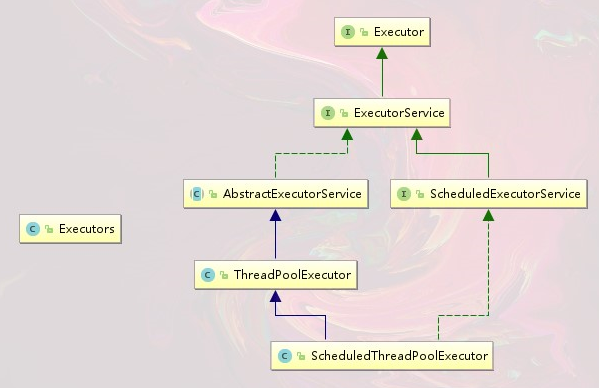
创建线程池的三个方法
这三个方法基本不能用
ExecutorService fixedThreadPool = Executors.newFixedThreadPool(5);ExecutorService singleThreadExecutor = Executors.newSingleThreadExecutor();ExecutorService cachedThreadPool = Executors.newCachedThreadPool();
a.固定线程池数量
范例:5个业务员办理10个任务
import java.util.concurrent.ExecutorService;
import java.util.concurrent.Executors;

public class threadPoolDemo {
    public static void main(String[] args) {
        ExecutorService threadPool = Executors.newFixedThreadPool(5);

        try {
            for (int i = 0; i < 10; i++) {
                final int t = i;
                threadPool.execute(() -> {
                    System.out.println(Thread.currentThread().getName() + "\t 办理第" + t + "个业务");
                });
            }
        } catch (Exception e) {

        } finally {
            threadPool.shutdown();
        }
    }
}
结果:
pool-1-thread-3  办理第2个业务
pool-1-thread-1  办理第0个业务
pool-1-thread-5  办理第4个业务
pool-1-thread-4  办理第3个业务
pool-1-thread-2  办理第1个业务
pool-1-thread-4  办理第8个业务
pool-1-thread-5  办理第7个业务
pool-1-thread-1  办理第6个业务
pool-1-thread-3  办理第5个业务
pool-1-thread-2  办理第9个业务
b.只有一个线程的线程池
范例:一个业务员办理十个业务
import java.util.concurrent.ExecutorService;
import java.util.concurrent.Executors;

public class threadPoolDemo {
    public static void main(String[] args) {
        ExecutorService threadPool = Executors.newSingleThreadExecutor();

        try {
            for (int i = 0; i < 10; i++) {
                final int t = i;
                threadPool.execute(() -> {
                    System.out.println(Thread.currentThread().getName() + "\t 办理第" + t + "个业务");
                });
            }
        } catch (Exception e) {

        } finally {
            threadPool.shutdown();
        }
    }
}
结果:
pool-1-thread-1  办理第0个业务
pool-1-thread-1  办理第1个业务
pool-1-thread-1  办理第2个业务
pool-1-thread-1  办理第3个业务
pool-1-thread-1  办理第4个业务
pool-1-thread-1  办理第5个业务
pool-1-thread-1  办理第6个业务
pool-1-thread-1  办理第7个业务
pool-1-thread-1  办理第8个业务
pool-1-thread-1  办理第9个业务
c.不固定线程池数量
范例:好多业务员办理十个业务
import java.util.concurrent.ExecutorService;
import java.util.concurrent.Executors;

public class threadPoolDemo {
    public static void main(String[] args) {
        ExecutorService threadPool = Executors.newCachedThreadPool();

        try {
            for (int i = 0; i < 10; i++) {
                final int t = i;
                threadPool.execute(() -> {
                    System.out.println(Thread.currentThread().getName() + "\t 办理第" + t + "个业务");
                });
            }
        } catch (Exception e) {

        } finally {
            threadPool.shutdown();
        }
    }
}
结果:
pool-1-thread-8  办理第7个业务
pool-1-thread-7  办理第6个业务
pool-1-thread-3  办理第2个业务
pool-1-thread-5  办理第4个业务
pool-1-thread-6  办理第5个业务
pool-1-thread-2  办理第1个业务
pool-1-thread-1  办理第0个业务
pool-1-thread-9  办理第8个业务
pool-1-thread-10     办理第9个业务
pool-1-thread-4  办理第3个业务
a. newFixedThreadPool使用
LinkedBlockingQueue
java
public static ExecutorService newFixedThreadPool(int nThreads) {
    return new ThreadPoolExecutor(nThreads, nThreads,
                                  0L, TimeUnit.MILLISECONDS,
                                  new LinkedBlockingQueue<Runnable>());
}
b. newSingleThreadExecutor使用
LinkedBlockingQueue
java
public static ExecutorService newSingleThreadExecutor() {
    return new FinalizableDelegatedExecutorService
        (new ThreadPoolExecutor(1, 1,
                                0L, TimeUnit.MILLISECONDS,
                                new LinkedBlockingQueue<Runnable>()));
}
c. newCachedThreadPool使用
SynchronousQueue
java
public static ExecutorService newCachedThreadPool() {
    return new ThreadPoolExecutor(0, Integer.MAX_VALUE,
                                  60L, TimeUnit.SECONDS,
                                  new SynchronousQueue<Runnable>());
}
底层代码
通过源码追踪可以观察到他们用的是同一种方法
public ThreadPoolExecutor(int corePoolSize,
                          int maximumPoolSize,
                          long keepAliveTime,
                          TimeUnit unit,
                          BlockingQueue<Runnable> workQueue) {
    this(corePoolSize, maximumPoolSize, keepAliveTime, unit, workQueue,
         Executors.defaultThreadFactory(), defaultHandler);
}
public ThreadPoolExecutor(int corePoolSize,
                          int maximumPoolSize,
                          long keepAliveTime,
                          TimeUnit unit,
                          BlockingQueue<Runnable> workQueue,
                          ThreadFactory threadFactory,
                          RejectedExecutionHandler handler) {
    if (corePoolSize < 0 ||
        maximumPoolSize <= 0 ||
        maximumPoolSize < corePoolSize ||
        keepAliveTime < 0)
        throw new IllegalArgumentException();
    if (workQueue == null || threadFactory == null || handler == null)
        throw new NullPointerException();
    this.corePoolSize = corePoolSize;
    this.maximumPoolSize = maximumPoolSize;
    this.workQueue = workQueue;
    this.keepAliveTime = unit.toNanos(keepAliveTime);
    this.threadFactory = threadFactory;
    this.handler = handler;
}
ThreadPoolExecutor 七大参数
int corePoolSize:线程池汇中常驻核心线程数;int maximumPoolSize:线程池中能够容纳同时执行的最大线程数,此值必须大于等于1;long keepAliveTime:多余的空闲线程存活的时间,当前线程池数量超过corePoolSize时,当空闲时间达到keepAliveTime值时,多余空闲线程会被销毁直到只剩下corePollSize个线程为止;TimeUnit unit:keepAliveTime的单位;BlockingQueue<Runnable> workQueue:任务队列,被提交但是尚未被执行的任务;ThreadFactory threadFactory:表示生成线程池中工作线程的线程工程,用于创建线程**一般默认的即可**;RejectedExecutionHandler handler;拒绝策略,表示当前队列满了并且工作线程大于等于线程池最大线程数(maximumPoolSize)时如何来拒绝新的线程需求;
底层工作原理
重点
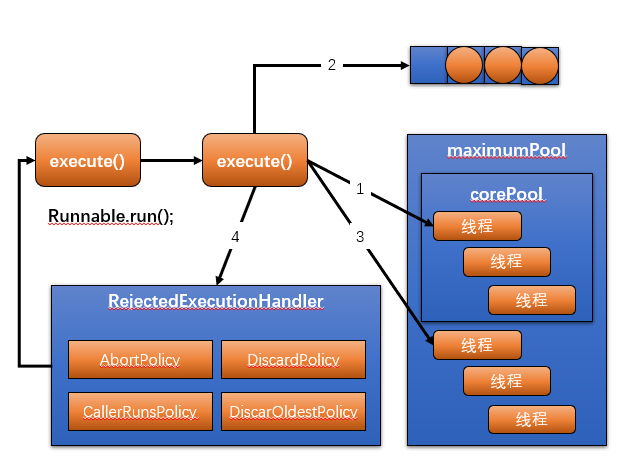
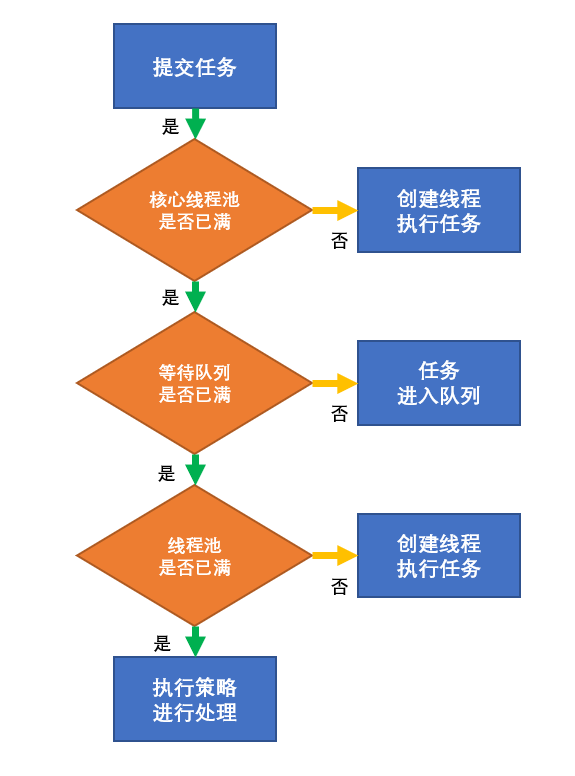
- 当创建了线程后,等待提交过来的任务请求;
- 当调用execute()方法添加一个请求任务时线程池会做出一下判断
- 如果正在运行的 线程数量**小于核心线程**数量(corePoolSize),那么马上**运行任务**;
- 如果正在运行的线程数量**大于或等于核心线程**数量(corePoolSize),那么将这个任务**放入队列**;
- 如果这个 时候队列满了且**正在运行的线程**数量还**小于最大线程数量**(maximumPoolSize),那么还是要**创建非核心线程**来**运行任务**;
- 如果队列满了且**正在运行的线程**数量**大于或者等于最大线程**数量(maximumPoolSize),那么线程池会**启动饱和拒绝策略**来执行;
- 当一个线程完成任务,它会从队列中取下一个任务来执行;
- 当一个线程空闲超过了心跳时间(keepAliveTime&unit设置的时间)时,这个线程就会被停掉,完成所有的任务后,最终会收缩到核心线程数量的大小;
线程池的4种拒绝策略
-
等待队列已经排满了,再也塞不下新任务了,同时线程池也达到了最大数量,无法为新任务服务,这个时候我们就需要拒绝策略机制合理的处理这个问题;
-
AbortPolicy(默认):
直接抛出RejectedExecutionException异常阻止系统正常运行;
- CallerRunsPolicy:
*调用者运行*一种调节机制,该策略不会抛弃任务,也不会抛出异常,而是将某些任务退回到调用者,
- DiscardOldPolicy:
抛弃队列中等待最久的任务,然后把当前任务加入队列中尝试再次提交当前任务;
- DiscardPolicy:
直接丢弃任务,不与任何处理也不抛出异常。如果允许丢失,这是最好的一种方案;
自定义线程池
阿里巴巴开发手册强制:
线程池不允许使用
Executors去创建,而是通过ThreadPoolExecutor的方式,这样的处理方式写的同学更加明确线程池的运行规则,规避资源耗尽的风险。 说明:
Executors返回的线程池对象的弊端如下:
FixedThreadPoo和SingleThreadPool:允许的请求长度为
Integer.MAX_VALUE,可能会堆积大量的请求,从而导致OOM。
`CachedThreadPo0l和ScheduledTreadPool:允许创建线程数量为
Integer.MAX_VALUE,可能会创建大量的线程,从而导致OOM。
范例:自定义线程池
package threadPool;

import java.util.concurrent.*;

public class MyThreadPool {
    public static void main(String[] args) throws Exception {
        ExecutorService threadPool = new ThreadPoolExecutor(
                2,//核心线程池数量
                5,//最大线程池数量
                5,//空闲释放时间
                TimeUnit.SECONDS,//时间单位
                new LinkedBlockingQueue<>(3),//阻塞队列3位
                Executors.defaultThreadFactory(),//工厂
                new ThreadPoolExecutor.AbortPolicy()//策略
        );
        try {
            for (int i = 1; i <= 9; i++) {//9个会导致报错
                final int t = i;
                threadPool.execute(() -> {
                    System.out.println(Thread.currentThread().getName() + "\t 办理第" + t + "个业务");
                });
            }
        } catch (Exception e) {
            e.printStackTrace();
        } finally {
            threadPool.shutdown();
        }
    }
}
java.util.concurrent.RejectedExecutionException: Task threadPool.MyThreadPool$$Lambda$1/0x00000008011f0c40@119d7047 rejected from java.util.concurrent.ThreadPoolExecutor@776ec8df[Running, pool size = 5, active threads = 5, queued tasks = 3, completed tasks = 0]
    at java.base/java.util.concurrent.ThreadPoolExecutor$AbortPolicy.rejectedExecution(ThreadPoolExecutor.java:2055)
    at java.base/java.util.concurrent.ThreadPoolExecutor.reject(ThreadPoolExecutor.java:825)
    at java.base/java.util.concurrent.ThreadPoolExecutor.execute(ThreadPoolExecutor.java:1355)
    at threadPool.MyThreadPool.main(MyThreadPool.java:18)
    at java.base/jdk.internal.reflect.NativeMethodAccessorImpl.invoke0(Native Method)
    at java.base/jdk.internal.reflect.NativeMethodAccessorImpl.invoke(NativeMethodAccessorImpl.java:62)
    at java.base/jdk.internal.reflect.DelegatingMethodAccessorImpl.invoke(DelegatingMethodAccessorImpl.java:43)
    at java.base/java.lang.reflect.Method.invoke(Method.java:567)
    at com.intellij.rt.execution.application.AppMainV2.main(AppMainV2.java:131)
pool-1-thread-1  办理第1个业务
pool-1-thread-2  办理第2个业务
pool-1-thread-4  办理第7个业务
pool-1-thread-4  办理第5个业务
pool-1-thread-5  办理第8个业务
pool-1-thread-3  办理第6个业务
pool-1-thread-2  办理第4个业务
pool-1-thread-1  办理第3个业务
如何合理配置线程池
//获取CPU是几核的,我的小米游戏本是12核
int x = Runtime.getRuntime().availableProcessors();
CPU密集型
CPU密集型的意思是该任务需要大量的运算,而且没有阻塞,CPU一只全速运行。
CPU密集型任务只有在真正多核CPU上才可以得到加速(通过多线程)。
- CPU密集型任务配置尽可能少的线程数量:
- CPU核数 + 1 = 线程池数量
IO密集型
- 由于IO密集型任务线程并不是一直在执行任务,则应配置尽可能多的线程,如:
CPU核数 * 2 = 线程池数量
- IO密集型,即该任务需要大量的IO,即大量的阻塞。
在单线程上运行IO密集型的任务会导致大量的CPU运算能力浪费在等待中。
所以在IO密集型任务中可以使用多线程可以大大的加速程序的运行,即使在单核CPU上,这种加速主要就是利用了被浪费的阻塞时间。
IO密集型时,大部分线程都处于阻塞状态,故需要多配制线程数:
- 公式:CPU核数 / ( 1 - 阻塞系数 ) = 线程池数量
- 例如8核CPU:8 / ( 1 - 0.8 ) = 80
一般阻塞系数在 0.8 到 0.9 之间